
REVIEW: ‘The Breadwinner’—A Beautiful Story That Stays With You

This Afghani girl’s story-based film reminded me why animation can touch souls deeper than any live-action film ever could.
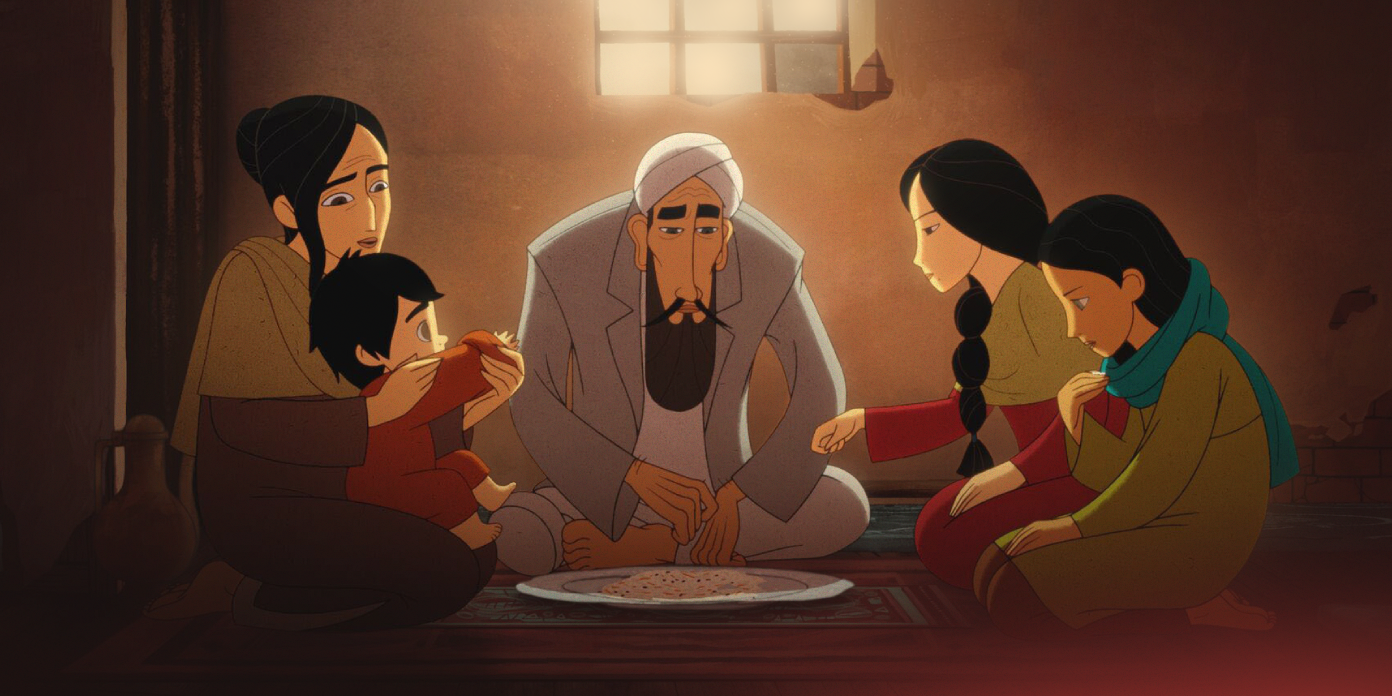
Here is a very detailed alt text description for this scene from The Breadwinner (2017, directed by Nora Twomey, Cartoon Saloon), capturing the warmth, intimacy, and subtle cultural details of the animated family moment: In a warmly lit, modest interior of a traditional Afghan home at dusk or evening, a humble Afghan family gathers intimately on the floor around a shared meal. The room has earthy tones—worn reddish-brown walls, a patterned rug or mat beneath them, and a small clay jug visible in the shadowed corner near the wall. Soft, golden-orange light spills from an unseen source (likely a lantern or window), casting gentle highlights and long, cozy shadows that emphasize the closeness of the group despite their evident poverty. At the center back, slightly elevated in posture and framed as the respected elder, sits the grandfather: an older man with a deeply lined, dignified face, prominent bushy gray mustache and beard, wearing a light gray or off-white turban and a loose, flowing gray robe or coat. He leans forward attentively, hands resting near his knees, his expression serious yet tender, brows slightly furrowed in quiet concern or contemplation. Directly in front of the viewer on the left side, the mother kneels/sits with her young infant son cradled protectively in her lap. She wears a dark headscarf wrapped tightly around her head, a long-sleeved olive-green or khaki tunic, and has a gentle but weary expression—wide eyes gazing down with love and a hint of sadness as she supports the baby. The toddler boy, with tousled dark hair, big curious eyes, and chubby cheeks, wears a simple red-orange outfit; he eagerly clutches and gnaws on a piece of flatbread (naan or similar), crumbs visible near his mouth, embodying innocent childhood joy amid hardship. To the right of the grandfather, two young daughters sit side by side, facing inward toward the meal. The older daughter (likely Soraya) has long dark hair in a thick braid draped over her shoulder, wears a soft teal scarf around her neck and a muted yellow-green tunic with red accents; her posture is slightly reserved, hands clasped near her chest, expression thoughtful and downcast with a subtle melancholy. Beside her, the younger girl (Parvana) has shorter dark hair (in this pre-disguise family scene), a redder tunic, and leans slightly forward with a more attentive, open look—her face softer and more hopeful. At the heart of the composition lies a large, round metal or ceramic plate/tray placed directly on the floor mat in the middle of the circle, holding a modest shared portion of freshly baked flatbread torn into pieces—golden-brown, slightly puffed naan or chapati-style bread dusted with flour or seeds, steam subtly implied in the warm air. The family's hands reach toward it in quiet unity, emphasizing communal eating Afghan-style without individual plates or utensils. The overall mood blends tenderness, resilience, and underlying tension: rich warm lighting contrasts the simple, sparse surroundings, highlighting familial bonds in a confined yet loving space, while the characters' subtle expressions hint at unspoken worries beneath the moment of togetherness. The animation style is hand-drawn with soft edges, textured shading, and a painterly quality typical of Cartoon Saloon—evoking both realism and gentle stylization.

Some films you watch and forget. Some films you watch, and they never leave your heart. The Breadwinner belongs to the second category of movies, and I have maintained constant mental playback of it since my first viewing.

Nora Twomey directed this 2017 film, which the Irish animation studio Cartoon Saloon brought to life through their work on Deborah Ellis’s novel adaptation. Angelina Jolie executive-produced the film through her Afghan girls’ school experience which she acquired from her visits, to create authentic frames. Saara Chaudry gives her voice to Parvana, who experiences all the emotional details of his character so effectively that audiences forget they are watching animated content.

The story follows eleven-year-old Parvana living under Taliban rule in Afghanistan. Her father faces false accusations, which leads her family into hunger because women require male protection to go outside. The little girl uses her brother’s clothes and her own hair to become the family protector. The story starts with a basic idea that transforms into an impactful presentation.

The film achieves its exceptional status through its ability to combine a fantasy story with the primary plot. The main character narrates her personal story through the boy who battles against the evil Elephant King. The animation combines authentic hand-drawn animations with puppet-style animation to produce an enchanting effect.

I found a personal connection to this film because these realities exist in my country. The Islamist doctrine prevents women from leading their lives without male guardianship. The film conveys its hidden truth because it shows that Islam does not permit people to keep women as their homebound property. The Breadwinner presents its human cost through distorted religious beliefs, which created an intense emotional response in me.

The Danna brothers, Mychael and Jeff, created music that includes a young Afghan girls’ choir to enhance the film’s existing beauty. Every visual choice, every sound, every word of dialogue serves the story perfectly.

This film reminded me why I am working on my own animated project, Under the Blaze, which explores child labour. Animation has this unique power to tell difficult stories with grace, to make audiences feel rather than just watch. The animated film The Breadwinner demonstrates that its content holds significant emotional weight, which remains with viewers throughout their lives.

The film moved me to tears while making me think about its content for multiple days. That occurrence happens infrequently. That experience holds great value.

IMDb My IMDb Ratings

Browse my personal movie ratings and reviews on IMDb.

View My Ratings on IMDb

Rated 10/10: Watch it. Feel it. Remember it.

★★★★★★★★★★